Sweating is a normal response
to a rise in body temperature. However in some
people the sweating is excessive causing great
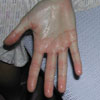
embarrassment and affecting lifestyle. Sweaty
hands make picking things up difficult, sometimes
it causes great difficulty with writing and is
often excessive, causing great embarrassment.
Sweating armpits can be so severe as to stain
clothing and seriously limit the activities a
person is prepared to participate in. A number
of effective treatments are now available, significantly
reducing the impact of excessive sweating.
Click
on image to enlarge
Botox
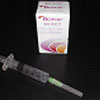
Botox paralyses the sweat
glands for 4-12 months. Botox is the first-line
treatment of choice for axillary hyperhydrosis
(sweaty armpits). It can also be used for some
other areas. The effects of Botox last for 4-12 months and can be repeated.
Botox injections into the armpit take 10-15 minutes,
and is mildly uncomfortable. Local anaesthetic
cream can be used but is rarely necessary. Botox
takes effect over the next few days.
Botox can also be
injected in a number of parts of the body to
reduce local sweating. There are a number of
alternative treatments for sweaty feet that exist,
all of which have varying degrees of effectiveness
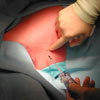
Axillary Botox
Click
on image to enlarge
Surgery (Endoscopic
Thoracic Sympathectomy)
Minimally invasive ETS (endoscopic thoracoscopic
sympathectomy) is the treatment of choice for
palmar (hand) hyperhydrosis. ETS may be suitable
for some patients with facial flushing.
ETS is usually performed as a day or 23 hour case.
The surgery takes 15-25 minutes under a general
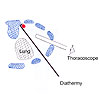
anaesthetic. Once the patient is asleep two 3mm
or 5mm access ports are carefully inserted into
the chest cavity. The position of the port sites
is carefully chosen to allow adequate access but
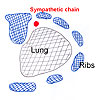
also to minimize the scarring. The lung is collapsed
allowing the sympathetic chain to be visualized
(See diagrams). The nerve is usually cut at two
levels. The lung is re-inflated and sometimes
a small drain is inserted. A chest X-ray is taken
to confirm the lung has returned to its normal
position. The patient can go home either the same
day or the next morning. Return to normal activities
is rapid (2-8 days). The other side can be operated
on a few weeks later.
Click
on image to enlarge
Port insertion
Sympathetic
chain
Patient after
sympathectomy on one side
Side Effects: A number of side
effects can occur after the procedure. Commonly
patients describe dry hands that may require the
use of moisturising cream. Compensatory hyperhydrosis
(increased sweating often in the small of the
back) is common. Very rarely there are problems
of a droopy eye (Horners Syndrome) or lung collapse.